For this portfolio, I read a novel titled I Know Why the Caged Bird Sings written by Maya Angelou. The novel encompassed various topics that allowed me to greaten my understanding of history and reality. This portfolio is based around one statement which I thought best represented the novel.
Angelou’s I Know Why the Caged Bird Sings is an excellent portrayal of Campbell’s “The Hero’s Journey” by demonstrating the journey plot, archetypal characters, and archetypal symbolism.
The four different types of media I will be providing to support my thesis statement will be a concept map, blog, podcast, and persuasive essay.
I chose the concept map to be able to organize my points in an artistic but factual manner. It includes images and short phrases to demonstrate my points. It will give the reader a brief introduction to my ideas in a way that is not too overwhelming for them. It is a toned-down, aesthetically pleasing version of my persuasive essay.
The blog post is effective because it is informal. It encourages discussion and allows me to voice my ideas with opinions. It allows me to use details that are not able to be conveyed in a concept map. The first person nature of a blog enables me to establish a connection with the reader.
The podcast is useful because it is an entirely different media form. All of the other media are written, while this one is spoken. A podcast is more informative but still has an informal tone. The tone which I communicate my information with can influence a reader’s interpretations.
The persuasive essay is beneficial as I can communicate my ideas in long paragraphs. This will allow me to provide immense detail in my analysis. On top of this, I can bolster my argument by using logos, ethos, and pathos in my writing. The unbalanced form of a persuasive essay allows me to focus more on specific topics as it lacks a concrete structure.
Throughout this course, I learned how to do a variety of things. I learned how to incorporate my voice into an essay, bolster my arguments, and create new media forms. It was certainly challenging at the beginning, but in hindsight, it is quite rewarding. I have learned the structure of various media forms, such as a podcast or blog while improving my writing skills and styles for each one. This portfolio may be challenging, but with the knowledge I have acquired throughout this course, I should be able to tackle it effectively.
In the past, I have written a couple blogs regarding Maya Angelou’s novel I Know Where the Caged Bird Sings. As you know, I have thoroughly enjoyed it, and so far I have delved into the novel from a Reader Response point of view and an Archetypal Literary point of view. Today, I will be analyzing the novel from an Archetypal Literary Theory perspective again! You might ask why? Well, simply, it is the most effective and valuable analysis technique for this novel.
To recap what has happened since the last time: Maya graduates from the eighth grade, Maya experiences an excruciating toothache, they move back to California, Maya moves in with Bailey and his girlfriend, Maya overcomes several obstacles, and Maya gets pregnant.
Now, for those of you who do not know what archetypal literary theory is, it is defined as “the unknowable basic forms personified or concretized in recurring images, symbols, or patterns” (Delahoyde). These images, symbols, and patterns are very prominent in I Know Why The Caged Bird Sings and certainly helped me gain a greater understanding of the book.
Overall, the book follows one of the fundamental plot archetypes, The Journey. The Journey can be broken down into 5 parts, the protagonist moves from innocence to experience, begins in a familiar environment, descent into danger, battle “monsters”, and returns home (ENG4UV, 2019). The protagonist in this novel is obviously Maya, who we establish to be the hero, and her life follows this journey quite well. She begins her life in Stamps, which is where she feels is home (Angelou, 58). Maya’s descent into danger is when Mr. Freeman rapes her (Angelou, 73). The battling of “monsters” is when she musters up the courage to convict Mr. Freeman (Angelou, 85). Finally, she returns home to Stamps and is proud of her accomplishments. Overall, she undoubtedly grows from a little girl from Stamps, to a young, mature woman. This journey shows the critical moments in Maya’s childhood and how they impacted her. It allows us to understand how and why she changed during the novel.
As I mentioned, I have already written about Maya and Momma’s archetypal characters, The Hero and The Caregiver/The Great Mother, respectively. There is still one more archetypal character I want to talk about, The Villain. In this novel, Mr. Freeman appears to be the villain. He is the individual who presents the biggest obstacle for Maya, our hero. He rapes her, but Maya still has a soft side for him, thus giving her a barrage of mixed emotions. Once she is able to convict Mr. Freeman and overcome her silence, she becomes a different person. She becomes quite courageous and does various activities that show her physical and psychological development. This includes driving a car down a mountain in Mexico and living alone for 2 months (Angelou). It is almost as though Mr. Freeman made her stronger. I would absolutely not want anyone to be raped, but in Maya’s case, it allowed her to mature and grow up faster, which is interesting.
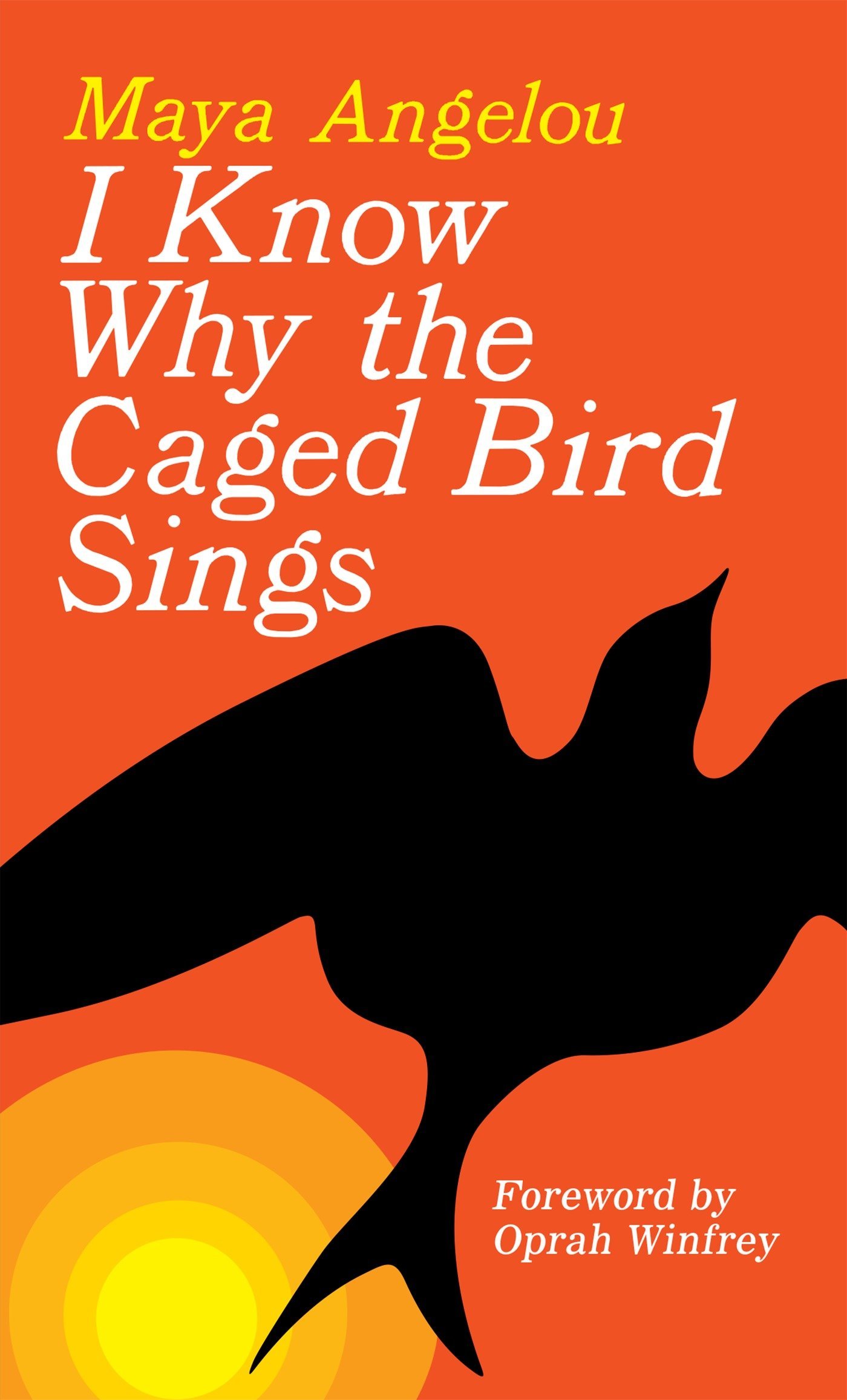
Another symbol that is prevalent in the novel and embodies Maya’s growth well is the sun. The sun provides healing, authority, glory, and warmth (Tomlin). The sun is located on the cover of the book for a reason, it is very vital in Maya’s growth as a person. It allows her to get over challenging obstacles, overcome various setbacks, and achieve stability. Although the sun does not actually come out of the sky and help her, it’s traits represent her journey very effectively.
One connection that I made while I was finishing up the novel was regarding the “relationship” between Maya and Mr. Freeman. Their struggle is similar to Harry and Lord Voldemort in Harry Potter. They are similar because the villain’s actions attempt to counter the hero’s actions. In both scenarios, the hero eventually overcomes the villain and puts them away, whether that be through killing them or putting them in jail.
Once again, I strongly recommend this novel for anyone who is looking for a good novel. It provides life lessons while also incorporating some history into it. It is non-fiction and in fact an autobiography, but it is written exquisitely. As usual, let’s continue the discussion in the comments and let me know if I missed anything! See you all later!
Hey everyone! Last week, I wrote a blog on the first third of the riveting novel and autobiographyI Know Why the Caged Bird Sings by Maya Angelou. Today I’m back with the second third of the story. Once again, each chapter provided some insightful information about Maya Angelou’s childhood and all things considered, it was another great read.
A quick rundown of events since last time: Maya returns back to Stamps but refuses to talk, a black boxer wins a crucial fight, Maya receives a valentines day card, Bailey loses his virginity, and a fellow-townsman loses his wife (Angelou).
Today, I will be demonstrating various archetypes in the novel. In the novel, there is an obvious hero and great mother, but there is also another symbol. This symbol would be the colour black. Maya represents the hero of the story, whereas Momma represents the great mother. Since the novel is also an autobiography, it is interesting that Maya Angelou’s life had similarities with literary archetypes as they are generally found in literature.
A hero generally struggles with life, faces obstacles, and eventually triumphs (Bernstein). This fits Maya’s story quite well. Maya doesn’t have a permanent home during her childhood and she experiences racism, sexism, and sexual assault. I’m not quite sure is she triumphs because there is still a third of the novel left. If I were to guess, I would think that Maya climbs her way up because she has transformed from an innocent girl to a smart and mature young woman during the novel. Maya begins to stand up for herself as she has been belittled enough. Maya was being kept as a servant for a white lady, and she repeatedly called her Mary instead of Maya. After a while, Maya became sick and tired of it and stood up for herself. “I dropped the empty serving tray” (Angelou, 110). Although that may seem stupid, it was Maya’s way of saying that she will no longer be mistreated. I believe that Maya has the grit not only to change her life but the lives of those around her as well.
There is also Momma, who plays the role of The Great Mother. Momma does whatever she can for Maya and Bailey while also standing by her morals. This is evidenced when Momma asks for interest on a loan she gave a dentist because he refused to treat Maya. In hindsight, Momma said it was the wrong thing to do and that she felt terrible, but she could not stand his racist behaviour (Angelou, 193). Momma is also well respected in the community and is a strong, independent woman. “Momma walked into the room as if she owned it” (Angelou, 189). Children learn from what they see, and Momma always tries to set the standards high regardless of what she is doing.
The colour black primarily represents one thing in this novel, skin colour. The black people are oppressed and are not given the same rights as white people. One thing that I noticed about black people is that they stick together. Their entire community is a family. This is evidenced when the whole black community got together to watch a boxing fight. The black boxer, Joe Louise, began losing and Maya said “My race groaned. It was our people falling” (Angelou, 135). Black is also used in a derogatory manner in the novel. “That clumsy nigger, Clumsy little black nigger” (Angelou, 110). Black has such a negative connotation in the novel that even Maya begins describing herself negatively. “It seemed terribly unfair to have a toothache and a headache and have to bear at the same time the heavy burden of Blackness.” (Angelou, 187). Black is typically associated with evil, and the novel contributes to that archetype by portraying the blacks as worthless through racism.
As I was reading the novel, I realized that the novel resembled The Life of Pi. Pi Patel was the main character in the story, and he was stranded on an island with a little boat all by himself. Maya finds support after her rape through books and novels, and Pi finds support through a survivial guide he sees on a lifeboat. Both Pi and Maya were able to overcome their respective obstacles and follow through a hero’s journey.
Once again, I recommend this book to anyone looking for a good novel. It contains lessons we can apply to our lives today and a detailed recap of the past. As always, I would love to continue the discussion in the comments! See you in the next one!
Works Cited
Angelou, Maya. I Know Why the Caged Bird Sings: Regular Print Book Discussion Kit. Assembled by the Henderson County Public Library, 2016.
Bernstein, Rebecca. “Archetypal Characters in the Hero’s Journey Infographic.” Point Park University Online, 23 May 2019, online.pointpark.edu/screenwriting/archetypal-characters-heros-journey/.
Recently, I wrote about the podcast, Serial, and that will be today’s topic as well. If you haven’t seen my previous post, you can check it out here. As you all know, I was blown away by the podcast and was instantly intrigued. Ever since, I have been looking into the situation and have uncovered some details which may prove Adnan’s innocence.
It has been 20 years since a now 39 year old Adnan Syed was arrested. His entire life and his families lives have been turned upside down because of this situation. Adnan has always maintained his innocence and I believe him. Personally, I think the cops did not do their due diligence with this case. Now, let’s dig into the details of this case.
Firstly, Asian McClain was never interviewed as a witness. This immediately tipped me off because which attorney does not want to protect their client. Asia McClain wrote 2 letters to Adnan stating that she remembered him in the library and so did her boyfriend and his friend. On top of this, 15 some odd years later, Asia still remembered nearly everything about that day despite how malleable our memory is. Asia remembered how it was the first snowstorm of the year, that she talked with Adnan, knew when he arrived and left, and gave 2 other possible witnesses. If Asia had all of this information, why wasn’t she interviewed!? Many people, including me, think that Adnan’s attorney, Cristina Gutierrez, was paid off (Koenig). This can be evidenced by the fact that she was disbarred in 2011 for draining a trust fund containing client funds (Geiger). Having an incompetent lawyer can certainly impact the integrity of your case and I think it definitely impacted the judge’s ruling on Adnan Syed.
Now to move onto some more scientific evidence. DNA samples were taken from Hae’s car and her body. Surprisingly, neither found traces of Adnan’s DNA (Evans). At this time, the police had 2 more suspects which they were investigating, Alonzo Sellers and Don Clinedinst. Alonzo Sellers was the man who found Hae’s body and Don was Hae’s boyfriend at the time. For whatever reason, the police did not take DNA samples from either man (Evans). This is flat-out absurd because when you look at it from this perspective, it seems as though the police were also paid off. If either man’s DNA had been matched to her body, there would have been a new, credible lead. Instead, the only leads they settled for were an anonymous call and subpar interview.
Thirdly, Jay Wilds should not be the only evidence in this case. I say this because Jay has proven to be unreliable; his story changes every single time he tells it. Recently, he told his story to The Intercept and a key part of the story changed. He mentioned that the burial took place around midnight, but cell tower records state that Adnan was around the burial site at 7 pm (Chaudry). Not to mention that these cell tower records were given by the opposition and were allegedly never cross-examined by Adnan’s attorney, Cristina Gutierrez (Geiger). If Jay admitted this, a retrial should be performed because a key piece of evidence has been put forward. Jay should also be removed as a credible witness because clearly, he cannot keep his facts straight. This alone should be enough to exonerate Adnan.
Lastly, I have one piece of evidence which is from an HBO show titled “The Case Against Adnan Syed“. At one point in the show, Nikisha Horton, and ex-girlfriend of Jay gets Jay on the phone. During this conversation, Jay reveals that “the cops pressured him into fingering Adnan in exchange for leniency regarding a marijuana-possession bust.” (Schager). Now, this is concerning, the cops have weakened the integrity of the investigation, the whole case is a mismatch of who said what, and someone’s life is getting destroyed. How does this happen in a successful country with a solid judicial system? This whole case should be looked back upon one day and every flaw in it should be fixed for future trials. Anyways, my question is, if everything Jay had said previously was used in court with no evidence to support it, why is this being taken with a grain of salt? Should this not warrant an investigation against the cops and Jay?? It is absurd to me that a retrial was not given despite this evidence.
Overall, this whole investigation is a mess and Adnan’s case for innocence has never been stronger. There is not much factual evidence against Adnan and although it is one word against another, it should be examined again with no bias. The evidence should be studied carefully and thoroughly this time and no stone should be left unturned. To conclude, Hae Min Lee’s murder back on January 13, 1999, should not be pinned on a charismatic teenager who happened to be an ex-boyfriend, it should be investigated and the real killer should be condemned.
“I Know Why the Caged Bird Sings” is a riveting novel and autobiography written by Maya Angelou. In this post, I will be interpreting the first third of the novel. The story encompasses important topics such as racism and rape while also telling the story of a young girl, Maya, who happens to be the narrator of the novel. It appears as though the novel will progress as Maya’s character grows and will outline how she overcomes discrimination and trauma but who knows!? The novel takes place in 2 places, Stamps, Arkansas and St. Louis, Missouri. The former of the places is where Maya can call “home”. She, and her brother, Bailey, live in Stamps with their grandma, who they call Momma. Not only is Bailey her brother, but he is also her idol. St. Louis is where Maya and Bailey go when they see their real parents. I’ll spare you the rest of the details as I don’t want to spoil the rest if you are planning to read it.
Personally, I am having a hard time truly connecting with the novel but I feel I am able to comprehend the situations effectively. I read a novel written by Harper Lee in Grade 10 titled “To Kill a Mockingbird“. Although these novels aren’t exactly the same, they share enough characteristics to allow me to gain a greater understanding of each other. There was one quote in the novel which really stuck with me, it was when Maya said “Of all the needs (there are none imaginary) a lonely child has, the one that must be satisfied, if there is going to be hope and a hope of wholeness, is the unshaking need for an unshakable God. My pretty Black brother was my Kingdom Come.” (Angelou, 23). Although I cannot exactly relate to the “lonely child” portion, I can relate to when she described her brother as her “Kingdom Come”. Whenever I need any help with anything, my older sister, Riya, is there to help me. She is always by my side to help me through whatever problems I have, whether it be a scrape because I fell or an art assignment that I struggled with. Thanks Sis!
Now, to discuss the purpose of the novel. The purpose seems to be quite straightforward and direct, to enlighten people about racism and sexual assault. I think this is an absolutely fantastic purpose as these are not be problems we should be dealing with in the 21st century. The inspiration behind this novel was first-hand experience with racism and sexual assault. I feel bad and it almost makes me angry that people have to endure this in their lives. It angers me because the people committing these idiotic activities feel no remorse and have no moral compass.
There was one thing that I noticed while browsing the novel a second time, there was some foreshadowing. Maya was crying when they were going to St. Louis with their dad and she asked if they could go back to Stamps (Angelou 58). Although this could be a coincidence, it seems as though Maya predicted that something bad was going to happen in St. Louis before it happened. This intrigued me and I looked for more examples but I was unable to find any, perhaps there are more the farther I progress into the novel.
While I read, I noticed a couple of things about myself. I thought about similar TV shows and movies depending on what was happening. I was always trying to draw connections regardless if they were meaningful or not. Whenever I got to a slower part, I began looking for a reference to the title. Maybe it hasn’t happened yet, or maybe I missed it, who knows?! Anyways, I’ll be back with another post sooner rather than later and in the meantime, I strongly recommend this book to you all whenever you read your next novel. See you in the comments!
Works Cited
Angelou, Maya. I Know Why the Caged Bird Sings: Regular Print Book Discussion Kit. Assembled by the Henderson County Public Library, 2016.
Earlier today, I listened to a fascinating podcast titled “The Alibi” from the podcast Serial. I first opened the podcast and noticed that it was close to an hour long and I was not the happiest person. I clicked play and was actually hooked from the first couple minutes. This may have to do with the host, Sarah Koenig, being so articulate and eloquent, but who knows. As I continued to listen and take notes, I became invested in the story and actually began my own tiny investigation into Google. I stumbled upon some articles about the case and some pictures of the main characters. I was really hoping that this podcast had some new breakthrough in the case but unfortunately it did not. However, this did not change my attitude towards it, I still think it was absolutely enthralling.
Personally, I had never listened to a podcast before and this was definitely a new experience. Had this investigation been presented to me in a novel form, I definitely would not have enjoyed it as much since I personally daze off quite a bit while reading. This was a new form of learning for me and something I will certainly consider doing again in the future. Now specifically regarding investigative journalism, I think this is a great outlet to present it. I personally responded quite well to this format. The listener gets to paint a picture of what happened in their own mind rather than seeing it on a screen like it would be on television and it certainly works. I feel that an audience member feels more connected to a podcast since they get to interpret it in their own way. A television show has everything already laid out so it is more a sit back and relax sort of thing. Overall, podcasts left a fantastic first impression on me.
The plot of this podcast was captivating and if there was one thing that I would take away from it, it would be the malleability of memory. A psychologist named Elizabeth Loftus has a theory which helps support this claim. To paraphrase, Loftus’ theory states that memories are highly flexible and can be altered by adding new information during the time interval between the event and the time an individual recalls the event. This idea of reshaping memories may have been used during Adnan’s court trial but with the information we have right now, we cannot be sure of that. Almost no one in the podcast seemed to remember what they did a few weeks back and I was quite shocked by this claim. I tried to see if I could remember what I did a few weeks back and the results were shocking. I could not remember! I have better memories for days that I wrote exams, but I have no idea what I did the days leading up to exams besides studying. Now considering the that series has many more episodes, I wonder what other leads they are going to get. As far as I can think, they need alibis for Adnan and the only way they are going to get them is by asking people to remember a certain day, which was more than a decade ago. This raises some red flags because, well, I could not remember a day 3 weeks ago, how in the world are these people going to remember something from 15 years ago. Anyways, I guess we will see how the podcast progresses.
As I mentioned earlier, I was doing my own little google investigation while listening to the podcast. While I was researching, I discovered that the podcast was actually quite a big hit. The podcast even has a dedicated subreddit, r/serialpodcast, on a website called Reddit. For those of you who do not know, Reddit is a website where there a subreddits, which are essentially groups, where people join if they are interested. I was quite surprised when I saw this subreddit because I did not know that the podcast was this famous. As I browsed the subreddit, I found people posting detailed responses to questions and they seemed to be a community. Good for them! Anyways, since the show seems to be quite recognized, I hope the podcast stays as an investigation rather than a reality tv show. Reality tv shows tend to create drama and cliffhangers to attract viewers and I certainly hope they do not do this with this podcast. Regarding Adnan’s family, I hope they get some closure by seeing the amounts of people that recognize and care for their story, but it is nowhere near balancing out the loss of not having their son with them.
Overall, this was a great experience. I am strongly considering listening to more episodes in this series and may consider branching out into other podcasts. Let me know if you guys have any good suggestions! As always I would love to continue the discussion in the comments!
Although many high school students think that English can be a waste of time or an irritant, I believe it should be mandatory for any post-secondary education. Currently, all programs require that English must be taken at the grade 12 level and I support that. Personally, I am looking into applying into the Medical Sciences program at Western and although I will not be encountering William Shakespeare or Maya Angelou on campus, I should still be able to communicate and comprehend at a high level. There is no better course to help enhance my skills than grade 12 English.
University is becoming more competitive as students are achieving higher grades
Although English is commonly referred to as a boring or useless course, it helps with various skills such as critical thinking, reading comprehension, vocabulary, grammar, and cultural literacy. These skills can be used in countless real-life scenarios ranging from work, school, and at home. On top of these skills, English class also teaches proper formatting which is a universal skill as nearly all post-secondary pathways require an individual to know the basics of formatting.
English helps us improve, grow, and progress in life through its many topics
One last skill which English helps strengthen would be communication. In the future, we will all deal with interviews to get a job or making first impressions on people, all of this is communication-based. Besides this, communication plays a major role in nearly everything. Some actors make loads of money reading a script, why can’t we all do that? The secret lies in communication, their skills are simply better than ours. Everyone has to build their own personality and how effectively one can communicate greatly impacts how people view them.
Now to switch gears, although ENG 4U definitely has its upside, it is not perfect.
Shakespeare has become less relevant in society which is making it a nuisance to some students
I personally have one gripe about English, it contains a couple of extra topics. One specific topic which students have a near unanimous disdain for is Shakespeare. Shakespeare is a trivial topic because although some students may love it, many hate it. Reading Shakespearean literature does not help very many individuals post-secondary because it can be described as outdated. In university, students are writing many essays and reading various studies and textbooks. For the most part, having an understanding of Shakespeare will not help in this. For the Medical Sciences program I wish to attend, it would certainly not benefit me. I believe we should cater the course to the majorities needs and move the Shakespearean aspect to a separate course. This would increase the amount of time students can spend on more relevant skills such as reading comprehension and essay writing.
Overall, English should absolutely be mandatory for university admissions. Despite the fact that there are components which are not as relevant as others, English helps students in a multitude of ways ranging from critical thinking to communication. The skills learned from the course are very prevalent in society.
This is why English should be mandatory for any student pursuing post-secondary education.
I would love to extend this discussion in the comments! See you there!
















 Rishi's Blog