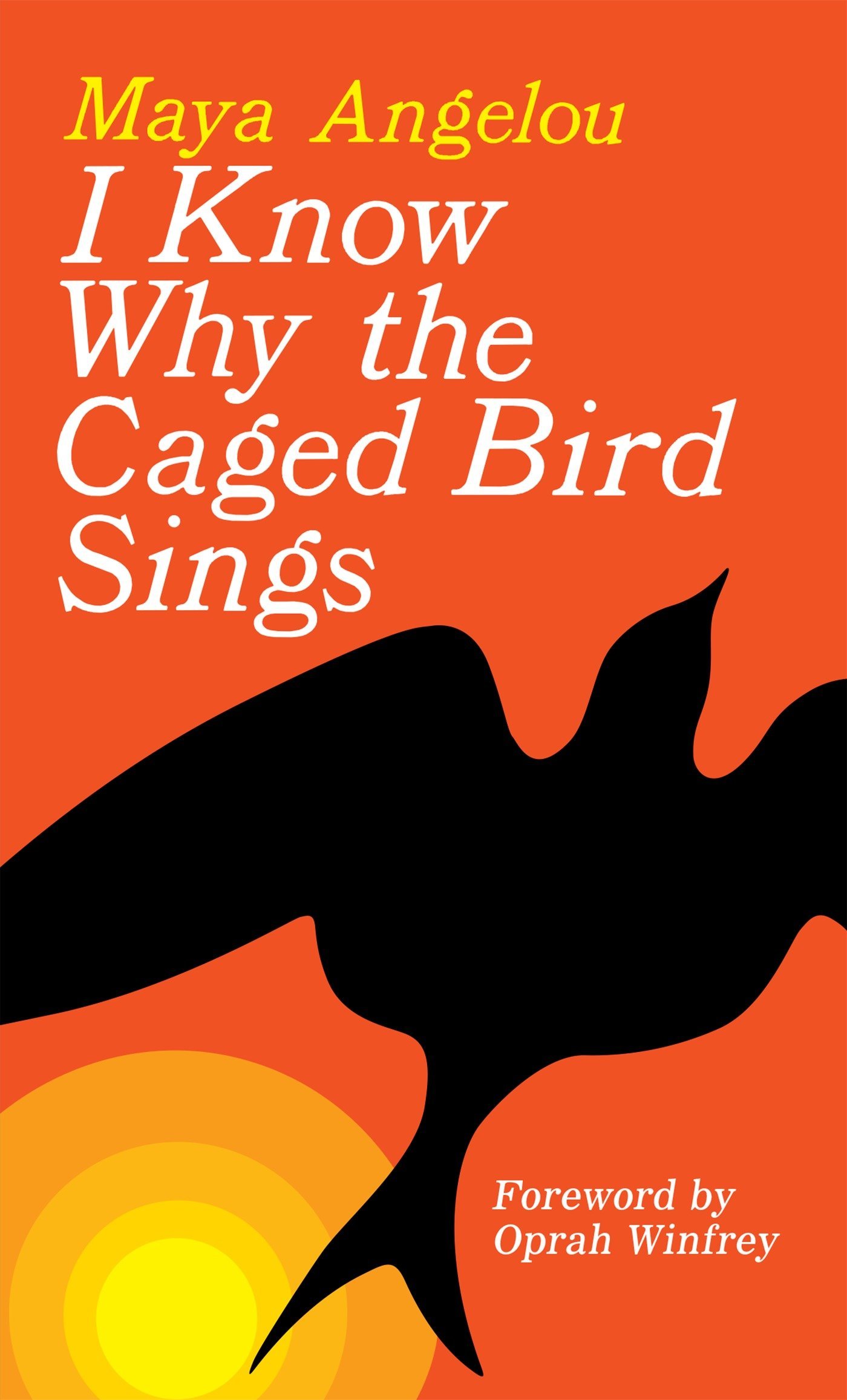
Retrieved from https://www.amazon.ca/Know-Why-Caged-Bird-Sings/dp/0345514408
Hey everyone! Last week, I wrote a blog on the first third of the riveting novel and autobiography I Know Why the Caged Bird Sings by Maya Angelou. Today I’m back with the second third of the story. Once again, each chapter provided some insightful information about Maya Angelou’s childhood and all things considered, it was another great read.
A quick rundown of events since last time: Maya returns back to Stamps but refuses to talk, a black boxer wins a crucial fight, Maya receives a valentines day card, Bailey loses his virginity, and a fellow-townsman loses his wife (Angelou).

http://www.soulcraft.co/essays/the_12_common_archetypes.html
Today, I will be demonstrating various archetypes in the novel. In the novel, there is an obvious hero and great mother, but there is also another symbol. This symbol would be the colour black. Maya represents the hero of the story, whereas Momma represents the great mother. Since the novel is also an autobiography, it is interesting that Maya Angelou’s life had similarities with literary archetypes as they are generally found in literature.

Retrieved from https://ui-ex.com/explore/clip-art.com-protagonist/
A hero generally struggles with life, faces obstacles, and eventually triumphs (Bernstein). This fits Maya’s story quite well. Maya doesn’t have a permanent home during her childhood and she experiences racism, sexism, and sexual assault. I’m not quite sure is she triumphs because there is still a third of the novel left. If I were to guess, I would think that Maya climbs her way up because she has transformed from an innocent girl to a smart and mature young woman during the novel. Maya begins to stand up for herself as she has been belittled enough. Maya was being kept as a servant for a white lady, and she repeatedly called her Mary instead of Maya. After a while, Maya became sick and tired of it and stood up for herself. “I dropped the empty serving tray” (Angelou, 110). Although that may seem stupid, it was Maya’s way of saying that she will no longer be mistreated. I believe that Maya has the grit not only to change her life but the lives of those around her as well.

Retrieved from https://clipartimage.com/clipart/9686-clipart-wise-woman.html
There is also Momma, who plays the role of The Great Mother. Momma does whatever she can for Maya and Bailey while also standing by her morals. This is evidenced when Momma asks for interest on a loan she gave a dentist because he refused to treat Maya. In hindsight, Momma said it was the wrong thing to do and that she felt terrible, but she could not stand his racist behaviour (Angelou, 193). Momma is also well respected in the community and is a strong, independent woman. “Momma walked into the room as if she owned it” (Angelou, 189). Children learn from what they see, and Momma always tries to set the standards high regardless of what she is doing.
Retrieved from https://www.cnn.com/2017/08/16/politics/blacks-white-racism-united-states-polls/index.html
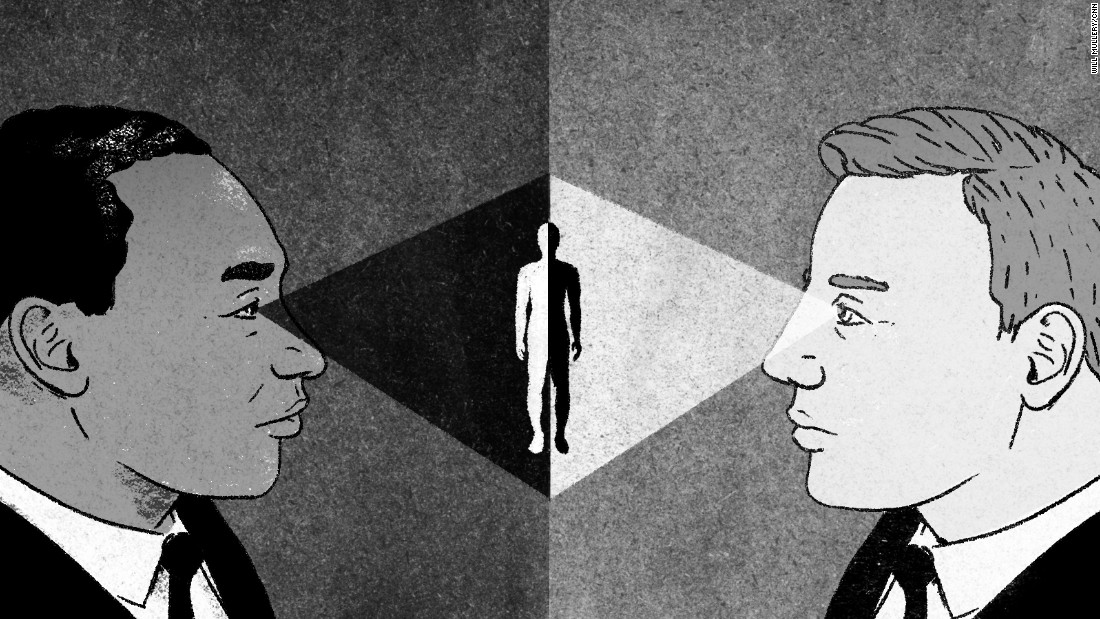
The colour black primarily represents one thing in this novel, skin colour. The black people are oppressed and are not given the same rights as white people. One thing that I noticed about black people is that they stick together. Their entire community is a family. This is evidenced when the whole black community got together to watch a boxing fight. The black boxer, Joe Louise, began losing and Maya said “My race groaned. It was our people falling” (Angelou, 135). Black is also used in a derogatory manner in the novel. “That clumsy nigger, Clumsy little black nigger” (Angelou, 110). Black has such a negative connotation in the novel that even Maya begins describing herself negatively. “It seemed terribly unfair to have a toothache and a headache and have to bear at the same time the heavy burden of Blackness.” (Angelou, 187). Black is typically associated with evil, and the novel contributes to that archetype by portraying the blacks as worthless through racism.

Retrieved from https://www.amazon.co.uk/Life-Pi-Yann-Martel-ebook/dp/B002RI9UBS
As I was reading the novel, I realized that the novel resembled The Life of Pi. Pi Patel was the main character in the story, and he was stranded on an island with a little boat all by himself. Maya finds support after her rape through books and novels, and Pi finds support through a survivial guide he sees on a lifeboat. Both Pi and Maya were able to overcome their respective obstacles and follow through a hero’s journey.
Once again, I recommend this book to anyone looking for a good novel. It contains lessons we can apply to our lives today and a detailed recap of the past. As always, I would love to continue the discussion in the comments! See you in the next one!
Works Cited
Angelou, Maya. I Know Why the Caged Bird Sings: Regular Print Book Discussion Kit. Assembled by the Henderson County Public Library, 2016.
Bernstein, Rebecca. “Archetypal Characters in the Hero’s Journey Infographic.” Point Park University Online, 23 May 2019, online.pointpark.edu/screenwriting/archetypal-characters-heros-journey/.
Shrier, Carrie. “Young Children Learn by Copying You!” MSU Extension, 20 Sept. 2018, http://www.canr.msu.edu/news/young_children_learn_by_copying_you.
Trailers, Movieclips. YouTube, YouTube, 25 July 2012, http://www.youtube.com/watch?v=3mMN693-F3U.
 Rishi's Blog
Leave a comment